
I’m frightened of war.
I grew up in the 70s when the threat of nuclear annihilation was a spectre stalking the world. Whenever a helicopter flew overhead at night (I lived near the SAS camp in Hereford, England), I thought it was the start of the end. I was 8 years old and the monsters under the bed came in the guise of Russian soldiers and mushroom clouds.
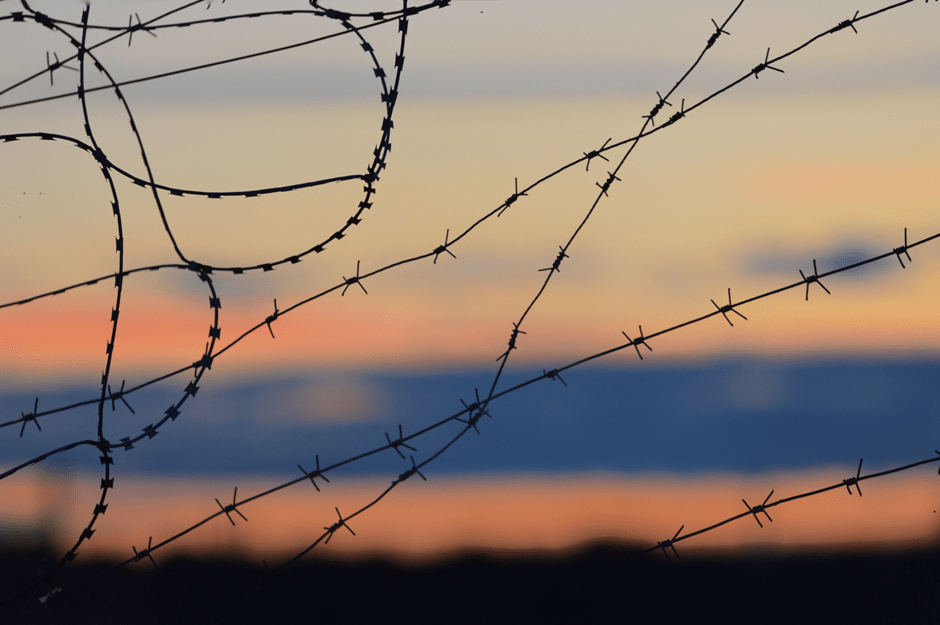
Image by Антон Дмитриев
Fifty years on and the monsters are back. This time they’ve moved out of my house and they’re pacing around Ukraine, laying waste to cities and industry, holding civilians captive in the freezing cold of winter, leading their own soldiers into a war of attrition. It seems that Russia has learned nothing from the terrible wars of the twentieth century and, even though much of Europe has avoided war, the Balkans is another reminder that peace is something temporary, something that not only frightens children.
One of the reasons I write about military history is a desire to understand why there is so much conflict in the world and why we repeat the same mistakes. The ancient history of our warring species can be traced back through every century, and one of the most influential treatises was that of the Roman General Vegetius, who had little military experience before writing Epitoma Rei Militaris. In this work, his now oft repeated phrase, ‘Si vis pacem, para bellum’ appears and it is one that I return to time and again to understand the inherent tensions in ‘the peace’ we maintain today.
A Western interpretation of that Latin saying is, ‘peace through strength’ often taken to mean that we must arm ourselves in order to enforce peace. This was certainly the approach during the Cold War where armaments were stockpiled in an increasing show of military might and leading to brinksmanship of the most deadly kind. I would rather interpret it as, ‘peace through wisdom’ taking strength to mean knowledge and experience. This may seem simplistic and idealistic in our ever more complex world, but if we truly want to have peace, lasting peace, we must seek out wisdom and learn from the mistakes of the past. This means recording, remembering, and analysing the political and military history of our nations. And we must do this with a critical and sceptical eye. As the victors are the ones who usually write history, it is impossible to know the whole truth. This partial knowledge will always impair our ability to make wise decisions about how to respond to aggressors. It will reduce our strength of wisdom and undermine our confidence in a world that prospers from peace. In that world, we will always rely on fear and aggression. It takes courage and vision to step away from the received wisdom of the history books, sanctioned by the victors, and to find the hidden stories, the forgotten heroes, the truths that have been conveniently lost because they did not fit the prevailing narrative.
Of course, I am making an assumption here that we do genuinely want peace. This may not be the case for some individuals, governments or nations. But, as a species, we must find a way to peace in order to survive in the face of the environmental challenges we have created on our planet.
There is another Latin phrase which advances Vegetius’ original premise: si vis pacem, para pactum – if you want peace, agree to keep the peace. There is a beautiful symmetry and simplicity to this phrase. Yet these words are those best suited to the arguments of pacifists and ideologs rather than the policies of a real world. The phrase appeals to all that is sensible yet seems impossible to enact as it would require unquestioning trust in every other country in the world. The likelihood of NATO countries believing that Russia, China, or North Korea intend to keep the peace is nil. If even one person blinks in this game of trust, the world ends.
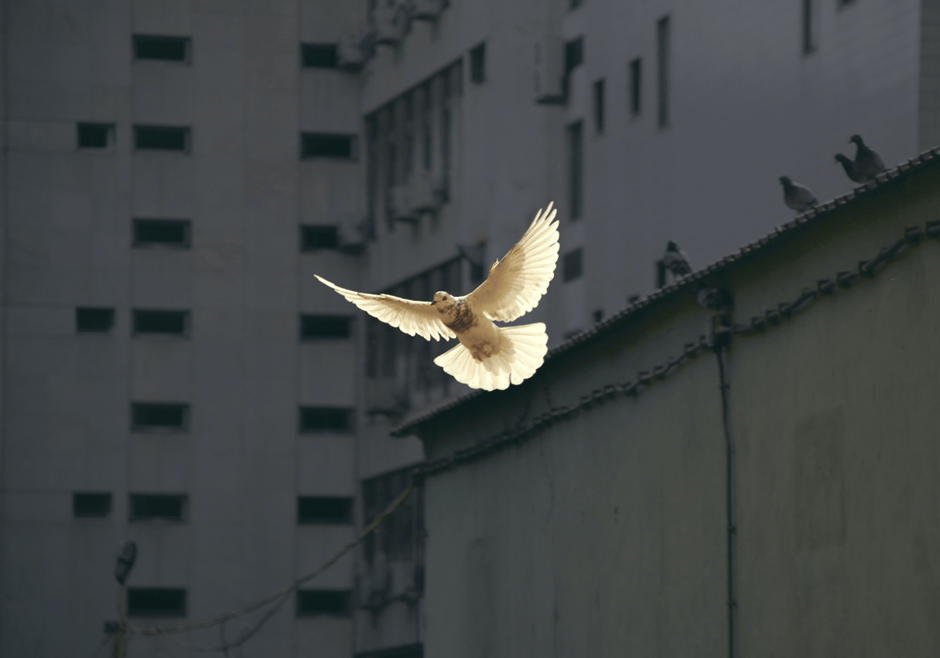
Image by Sunguk Kim
All of these ruminations are hypothetical, set in the macro and macho arena of global leaders who enjoy the power they’ve achieved. They have the ability to take their nation to war, to orchestrate the annihilation of other nations, to bring pain, suffering and despair to those who have absolutely no power. In this, none of us have anything to offer to change the reality of how quickly we could find ourselves at war.
By reimagining the story of one Swordfish mission in An Average Pilot, I was able to make some sense of what war must have been like for the men of 830 Sqn, Royal Navy Fleet Air Arm. By researching the details of the aircraft, reading logbooks and letters, examining contemporary accounts, and trawling through historical interpretations, I was able to make connections with the past, a past that existed before I was born but which allows me to live the life of freedom and good fortune I have today. It is these micro-histories that we must capture, we must take the time to remember so that we don’t lose sight of what sacrifices the men and women we never knew have made for us. There was so little time between the horrors of World War I and the relentless carnage of World War II that it seems hard to see how preparing for war could have prevented it. Of course, these were seen as the two major conflicts of the twentieth century but there were many, many more all across the globe. Preparation didn’t prevent them, either.
Sitting in England, the verdant countryside quiet and welcoming, I fear for a future like the one playing out across Ukraine. We are nearing the 80th anniversary of the end of World War II and yet it feels like we’re looping back around. It feels like the monsters under the bed are laughing at how very little we have learned, and I can feel their claws creeping ever closer.
Bev Morris
Note
Si vis pacem, para bellum is from Epitoma Rei Militaris, written by the Roman General Vegetius between 384 and 389 AD.
 Double Dagger Books